


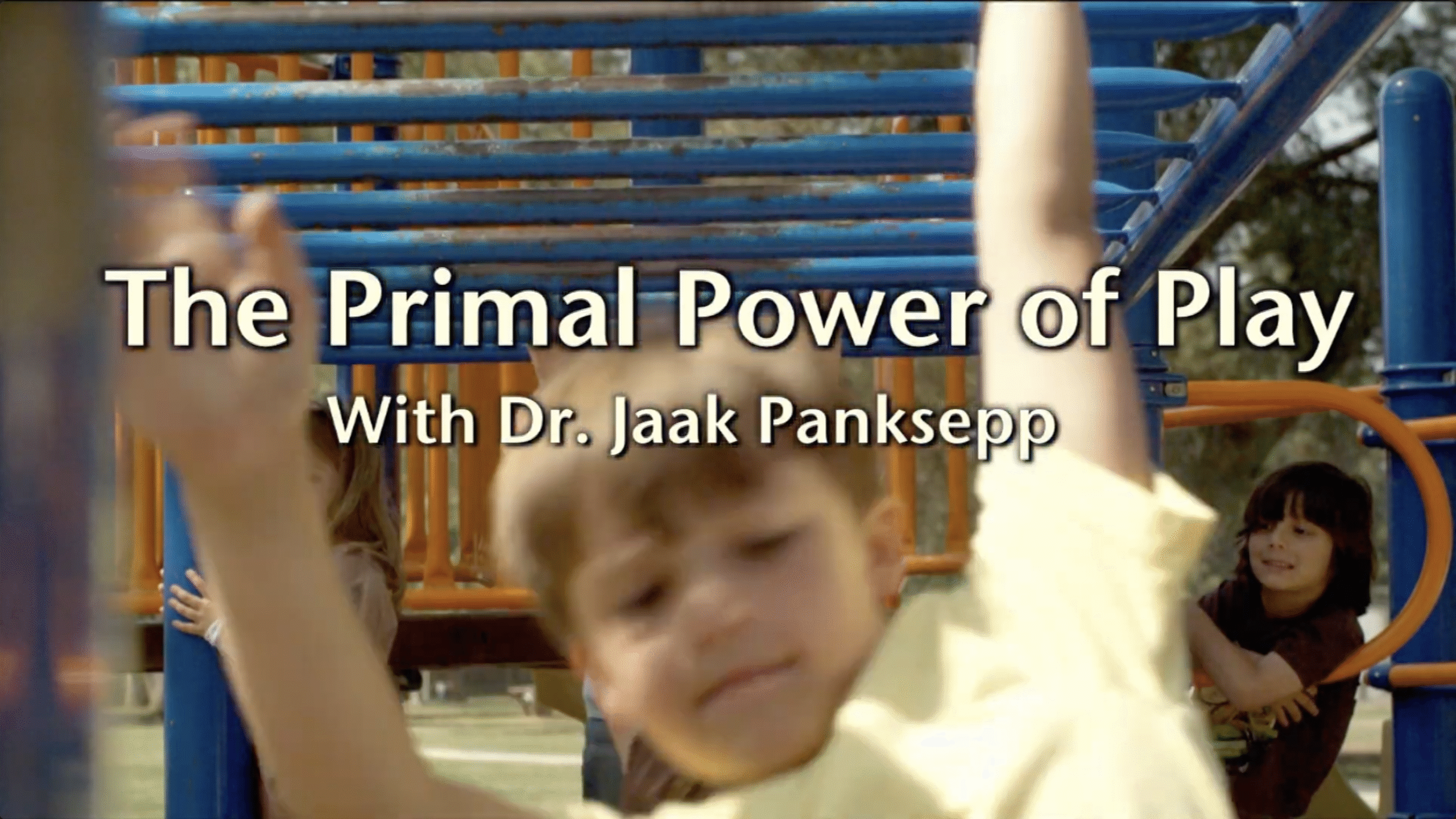
“Play and depression may be opposite sides of a coin,” says Dr. Jaak Pansepp, Baily Endowed Chair of Animal Well-Being at Washington State University. He explains how “real play” is essential to a child’s development. He also describes his serendipitous discovery of rat laughter
Play is one of the nine components of our Evolved Nest. Learn more about PLAY on Kindred.
Jaak Panksepp emphasized that play is a fundamental biological drive, essential for optimal brain development, social learning, and emotional well-being. He discovered that play circuits are hardwired into the brain and that depriving an animal of play can be as powerful a motivator as thirst or hunger. His work highlighted how play helps individuals learn social skills, build bonds, manage impulses, and improve cognitive abilities.
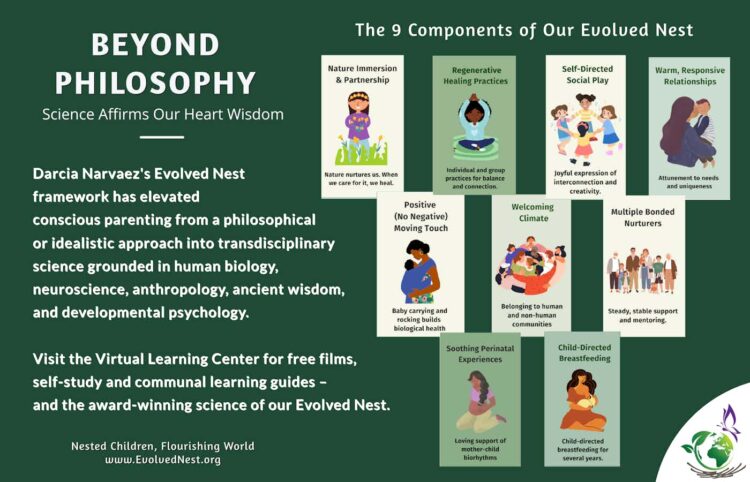 Play as a biological drive
- Panksepp identified “play” as one of the seven primary emotional circuits present from birth in mammals.
- The urge to play is an instinct, deeply rooted in the brain’s midbrain, that motivates social and physical interaction.
- Like hunger or thirst, a lack of play can create a strong desire or “hunger” for playful experiences.
The benefits of play
- Social learning: Play is crucial for social development, teaching animals and humans how to interact with their peers, understand social rules, and build relationships.
- Emotional regulation: Play helps build self-control and can lead to adults who are less impulsive and more socially intelligent.
- Cognitive function: Play promotes mental acuity, problem-solving, creativity, and confidence.
- Physical development: Physical play is vital for developing spatial awareness and motor skills.
Implications of play deprivation
- Panksepp believed that a lack of play, especially in early life, is a serious problem.
- He theorized that this lack of play could be a contributing factor to rising rates of conditions like ADHD.
- For a long-term view, he argued that the value of play is so fundamental that it deserves greater recognition in psychological research.