
Ecoflluency: Remembering Our Way Home, An Interview with Saskia von Diest
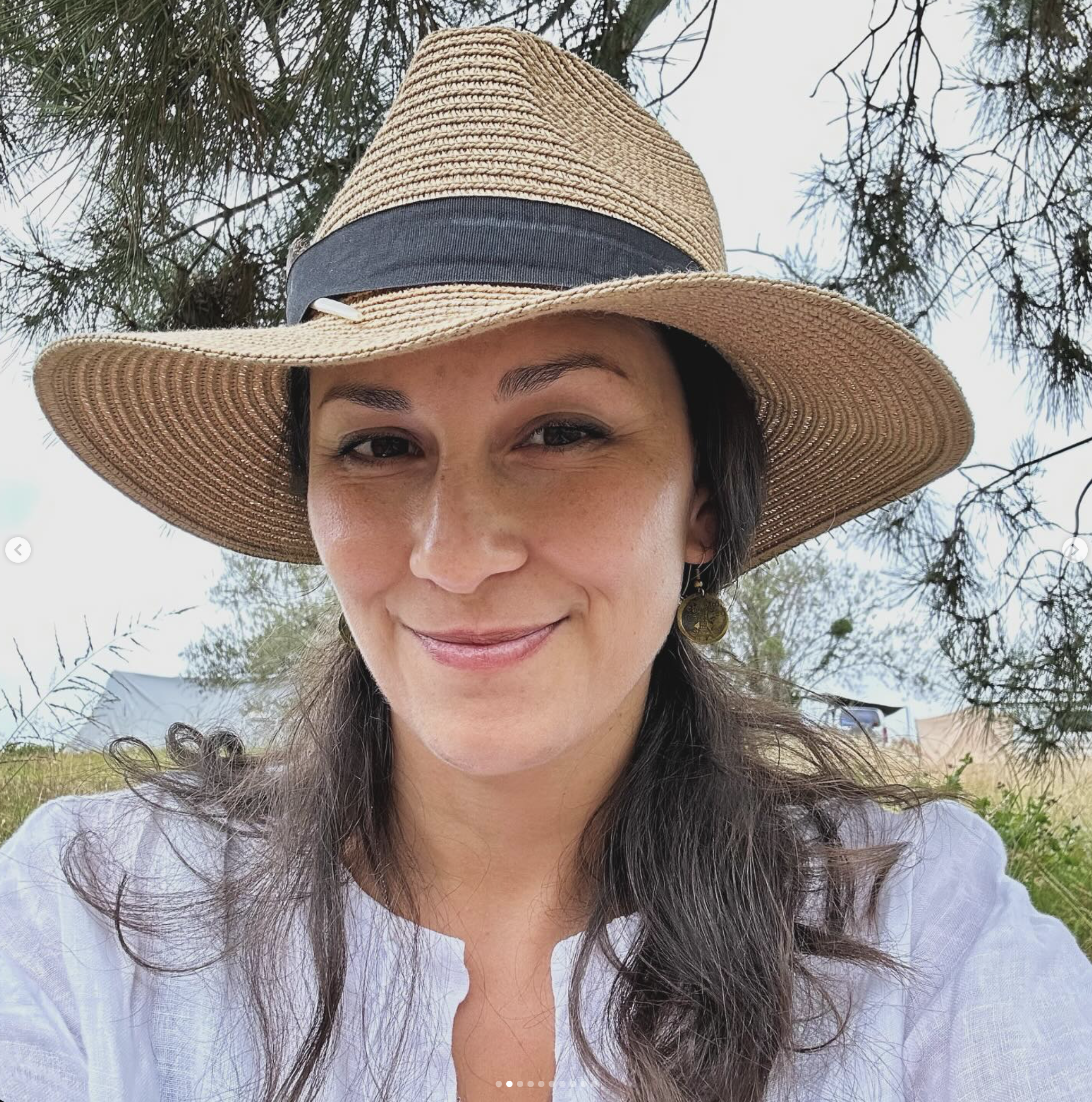
Saskia von Diest is the founder of Ecofluency, an award-winning organisation that offers education, consulting, research advice and activism in communication with Nature since 2021. Eco-fluency involves remembering and reclaiming ancestral skills of dialogue with the more-than-human world to foster belonging, resilience, enchantment, and right relationship with Earth. It positions humans as keystone species who can co-create harmoniously rather than dominate.
Join Lisa Reagan and Saskia in their exploration of Nature and more-than-human-kin, including elementals and land spirits, our need for worldview-shifting, stories of healing, and realizations of belonging.
Watch the Interview
Listen to the Interview
What is Ecofluency?
Ecofluency is the definition I use for the science, art, and magic of two-way communicating with Nature (academic definition below). It is the oldest form of communication and exists beyond all languages, using an expanded range of sensory awareness. It is the original language of consciousness.
Why is it important?
It is our ancestral birthright to reclaim the power and magic of this capacity, to help us realign our decision-making and be truly in harmony with the rest of Nature.
Because humans are Nature, all of us can do this – many of us have just forgotten that this inherent ability lies dormant in us. Fortunately, it can easily be rediscovered and developed.
Nature communication helps us to listen deeply to and dialogue with any aspect of the more-than-human, from tiny plants to towering trees, small insects to large animals, clods of compost to constellations of stars, even ancestors and nature spirits.
It is our responsibility to rekindle this critical skill for practically co-creating with the more-than-human world. With it, we can access the wisdom and intelligence of Nature for growing food, building a home, understanding the behaviour of wild, domesticated and even microbial beings, designing research projects and new business ventures, expanding your creative processes, and deepening relationship with landscapes, and much more, to grow beyond resilience and thrive.
Ecofluency is paradoxical – it is as much about learning something new, as it is about unlearning the barriers that we have been taught to this ancestral skill of ours. It doesn’t reconnect us with Nature, but dissolves the illusion that we were ever disconnected in the first place. It helps us to feel more connected with the world beyond our built walls, reminding us that we are all at home on this Earth.
We all belong here. By learning how to ask for and receive support and guidance from Nature, we can leverage this vital resource for a healthier, happier, more abundant and enchanted way of being, in alignment with the rest of life on Earth.
ACADEMIC DEFINITION
The definition that I published in 2019 for ecofluency is “the ability to fluidly and accurately converse with more-than-human nature using the expanded spectrum of human sensory awareness”.
In that same open access journal article, I expand on it as follows (a simpler explanation follows below):
“Etymologically, ‘eco’ is derived from oikos (Greek) meaning ‘house’ or ‘habitation’, and ‘fluency’ from fluentem (Latin) meaning ‘free-flowing’ or ‘relaxed’.
This builds on ecoliteracy, which applies a more holistic understanding of complex systems thinking in order to ‘read’, or sense, into “the book of nature”. [But ecoliteracy] is limited by both one’s definition of ‘book’ and what it actually means to be ‘literate’: literacy tends to be dependent on explicit knowledge and one’s ability to effectively comprehend and interpret it.
Additionally, perceiving nature as a book implies that there is a passive uni-directional ‘reading’ of ‘nature’. Ecofluency, as I propose, goes a step beyond: it not only requires fostering an intimate comprehension of the functioning of interconnected ecological systems, but it invites us to acknowledge and apply our understanding of the bidirectionality of our participation with/in ‘nature’, to cultivate a sense of harmony (flow) through a process of co-creation (dialogue) with the more-than-human world.
This requires an expanded perspective of ‘nature’: one that shifts from seeing it as a background for human activity and food growing, to an animate web of inter-related organisms with which we can commune through a range of intuitive approaches.
…Integrating the rational and intuitive faculties of human awareness allows one to develop ‘a feel’ or ‘attunement’ for the more-than-human world and, in time, bring one into closer relation with biodiversity – an approach deemed vital for averting the ‘extinction of experience’…
… the primacy of direct experience needs to be emphasized… The practice of ecofluency also encourages more regular, direct and meaningful contact with nature and the sublime – elements that inculcate a sense of connectedness and, in turn, fosters a conservation ethic that supports pro-environmental behaviour…”
IN OTHER WORDS
Ecofluency means not just reading Nature’s facial expressions, body language and lips, but meeting Nature and other-than-humans as kin, as relatives, and learning (or remembering) a language, or a deeper way of communicating with them, in which one can develop fluency.
Why is this important? Communication is fundamental to finding harmony in any relationship, as it engenders trust and facilitates healing. This applies to all relationships, including the one we have with ourselves (we are Nature) and with the other-than-human beings in the external landscape.
It also means awakening all the senses, being aware of our sensations, feelings and emotions, to be more in-tune with one’s larger home in Nature, because that is also how Nature transmits information. A bit like how you become familiar with the sounds, smells, sights, tastes, feel of your built home, like the sound of certain doors, or the different footsteps of people you live with, the way you feel when you close the front door, the smell of the kitchen, the texture of certain surfaces. These are all ways we interact with our environment.
It’s about remembering how to speak and listen. With our bodies as listening instruments, we can feel, move, dance, laugh, touch, sing, cry, in and with the rest of Nature, as ways of attuning and being.
Rather than actively searching with our eyes, relaxing, listening with all of yourself, and allowing that which needs to come into focus, we allow Nature to reveal itself.
This embeds the communion in the communication, and brings us closer to knowing Nature, others and ourselves.
So the invitation is to try less hard, and simply be, at peace, in our larger home of Earth.
And it is knowing that we are our own home. Because, again, we are Nature itself too. Which again emphasizes the role that listening to our bodies plays in listening deeply to Nature.
The best part is that all of us can do this, but many of us have just forgotten how. Which is why I offer what I’ve learned to other people.
“The psyche has never been only human.”
— Dr Daniel Foor, Ancestral Medicine