
Meeting Childhood Developmental Needs Through Nature Immersion
by Tom Niebur, Master Naturalist & Parklands Foundation Steward

In my brief time doing volunteer work for local conservation organizations, like the Parklands Foundation, I have been sad to witness a struggle in obtaining participation from children in various nature events. This article is intended to identify some core childhood developmental needs that can be met by nature immersion. Public awareness of some of these needs is not common in our culture currently.
Land acknowledgements, doing a sit spot or sauntering/mindful practice, playing in a natural setting, stewarding a particular preserve on a regular basis are all placefulness strategies to meet a need for deep rootedness and belonging. Belonging is a common unmet need for children in our culture these days
The Evolved Nest
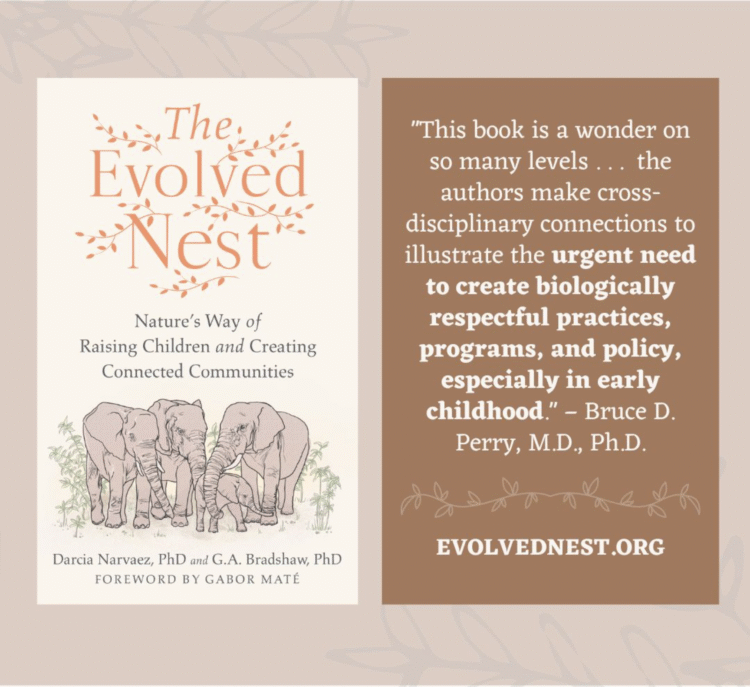
Darcia Narvaez wrote a brilliant book about healthy child rearing: “The Evolved Nest: Nature’s Way of Raising Children and Creating Connected Communities”. Most of her ideas were derived from indigenous cultures around the world. Nature immersion is one of ten essential elements described in the book. Richard Louv defined a diagnosis in many children called Nature Deficit Disorder. Connectedness to and a sacredness towards nature is fundamental. We evolved in the context of nature.
Prosiliency
Steven Hoskinson coined this term within the program of therapy and coaching called Organic Intelligence. Steven teaches his students to practice the Strategic Use of Perception (SUPs). One allows their “system”/body to naturally orient to sources of sensory and somatic/body pleasure. The intention is to develop resiliency by building one’s capacity for fun, joy, and pleasure. Nature immersion can be primary and very effective source for these experiences. James W. Prescott linked higher levels of somatic and sensory pleasure to lower risk for being violent.
Co-regulation
Steven Porges and Natureza Gabriel have written and taught extensively about polyvagal theory and the neurobiology of connection, respectively. Both emphasize the importance of teaching children and adults about how to regulate one’s state of being. If one’s autonomic nervous system is in “fight, flight, or freeze” mode, one could learn how to shift to a relaxed, playful, and/or connected state of being. Typically, co-regulation would be referring to another trusted human as the source of regulation, like a parent or friend. An immersion in nature can also meet this need.
Rhythmic Living
 Nature immersion can teach children a healthy rhythm. Children can pay attention to the seasons of the year, to the cycle of death, decomposition, and new life in nature. A natural rhythm can run counter to some of our cultural conditioning: striving, hyper-competitiveness, speed, pressure, overcommitment, overwhelm, packed schedules, time-boundedness, and chaos. A natural rhythm can foster a slower pace, a better balance between work and rest, more “flow” experience, connection, presence, groundedness, peace and restorative sleep.
Elevated Emotional Experiences Like Ecstasy, Awe, and Transcendence
These are experiences where a child can stand outside their ordinary self and feel a connection to something much larger like a river, mountains, Gaia, or universe. Sky gazing at night would be an example. For many indigenous cultures, this could be described as a spiritual experience.
Species Normal Flourishing
Nature immersion is a human “species normal” context for childhood development. Jon Young studied and visited many different indigenous cultures, who have immersed themselves in nature. In this process, he identified the following list of human thriving characteristics with those indigenous peoples: a quiet mind, childlike glee, vitality, autonomy, sense of humor, outstanding memory and sensory awareness, sacredness for all of life, connection to spirit, competency within a landscape, and a host of positive relationship skills.
Koyaanisqatsi: Life Out of Balance
Koyaanisqatsi is a Native American Hopi word. This word may describe the state of our current culture. Gregory Bateson once noted “The major problems in the world are the result of the difference between the way nature works and the way man thinks.” Nature immersion can teach children a much better balance that would includes limited accumulation, maximum utilization and humanistic distribution of resources, and a balance in the development of physical, emotional, spiritual, and mental capabilities.
Healthy culture means the right relationship between humans and nature. Recognizing our place in the web, not above it or outside it, but an integral part of it.
I hope I have spiked your motivation to role model and help children in your community to access, learn from and enjoy nature on a regular basis. To do so, might ensure the survival of the planet and the well-being of future generations.